
怎麼說出哪裡不舒服:sore、stiff、dizzy、nauseous、tired
當你身體不舒服時,簡單的字會變得很重要。你可能需要告訴朋友自己為什麼要提早離開、向醫生描述症狀、解釋自己為什麼沒辦法運動,或是在小問題變嚴重之前先求助。能描述身體感覺的日常英文很實用,因為它能讓別人了解你不舒服的類型、位置、程度,以及狀況有沒有在變化。
許多學習者都知道「pain」這個字,但真實的對話往往需要更多細節。「My neck hurts」很好用;「My neck is stiff and sore from sleeping badly」更清楚;「I feel dizzy when I stand up」則提供了更有用的資訊。目標不是讓自己聽起來很專業,而是用自然的英文描述你真實的狀況。
圖卡快速複習:身體不舒服英文 4 張重點卡
關鍵差異
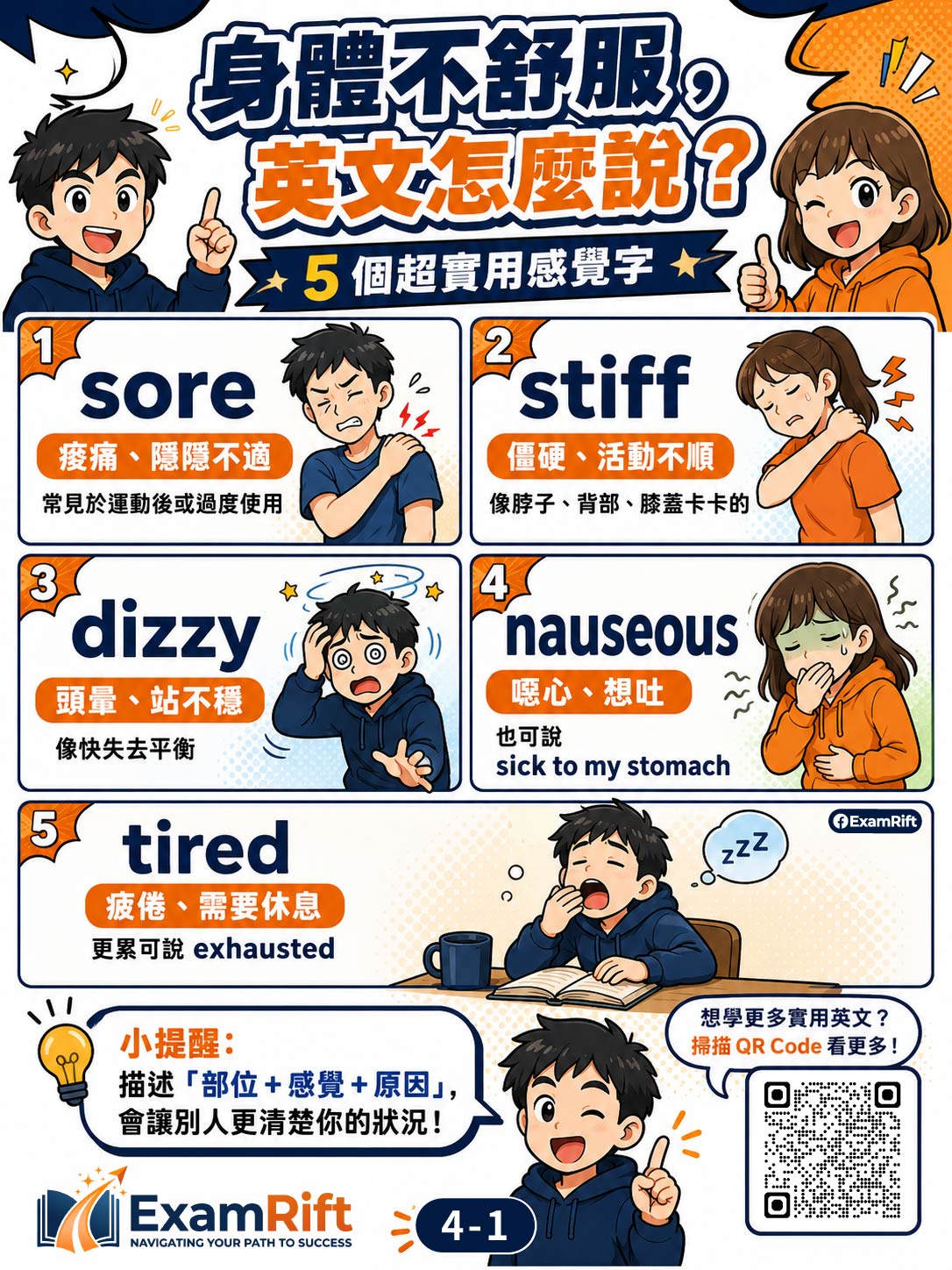
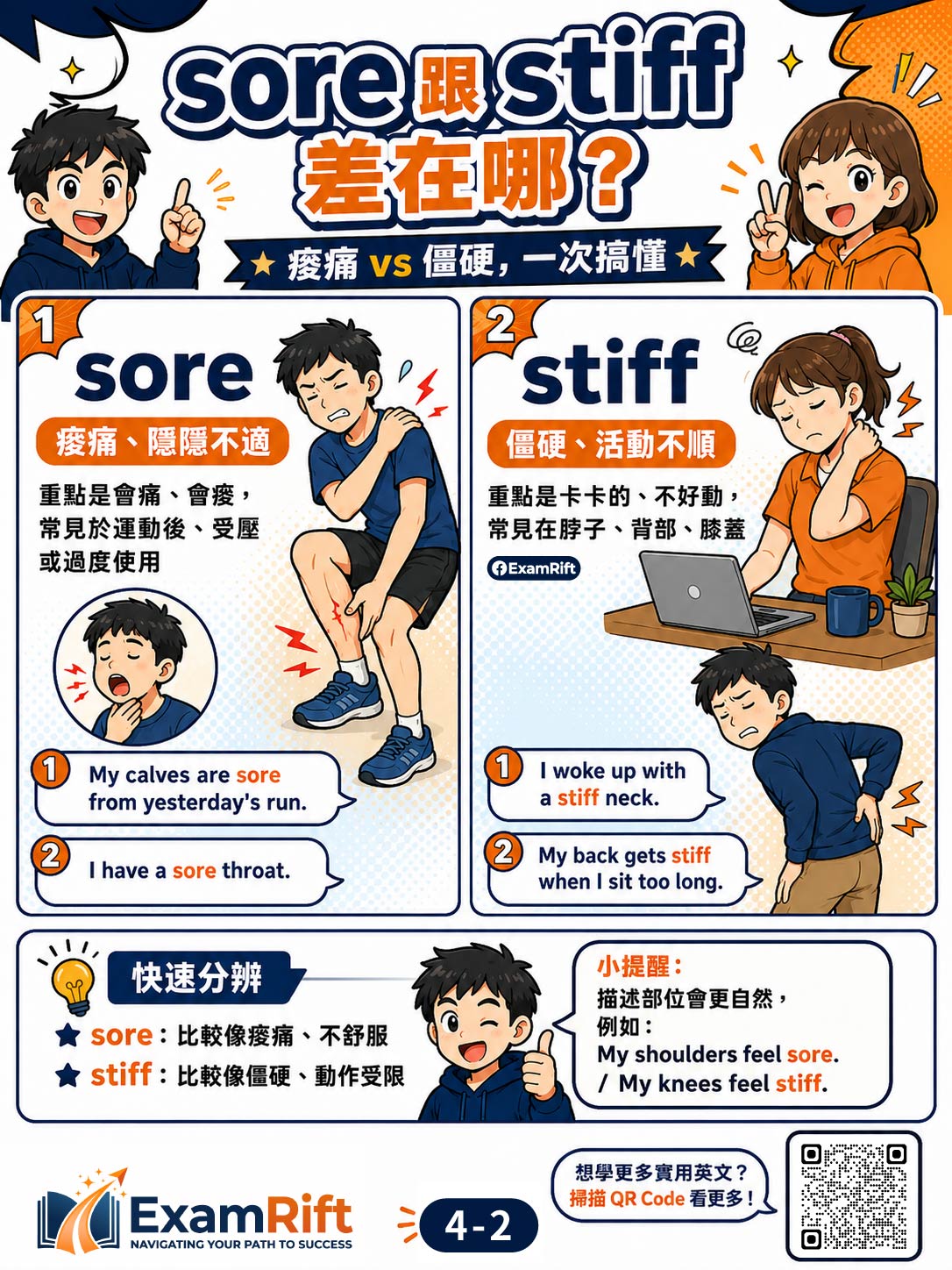
sore 用在身體某處出現鈍鈍的、有點脹痛的不適時,常發生在運動、受壓或過度使用之後。爬完山後你的腿可能會 sore;快感冒時你的喉嚨也可能會 sore。
stiff 用在身體某處活動起來不順暢的時候。脖子僵硬、背僵硬或膝蓋僵硬可能不是劇烈疼痛,但動作會受到限制。
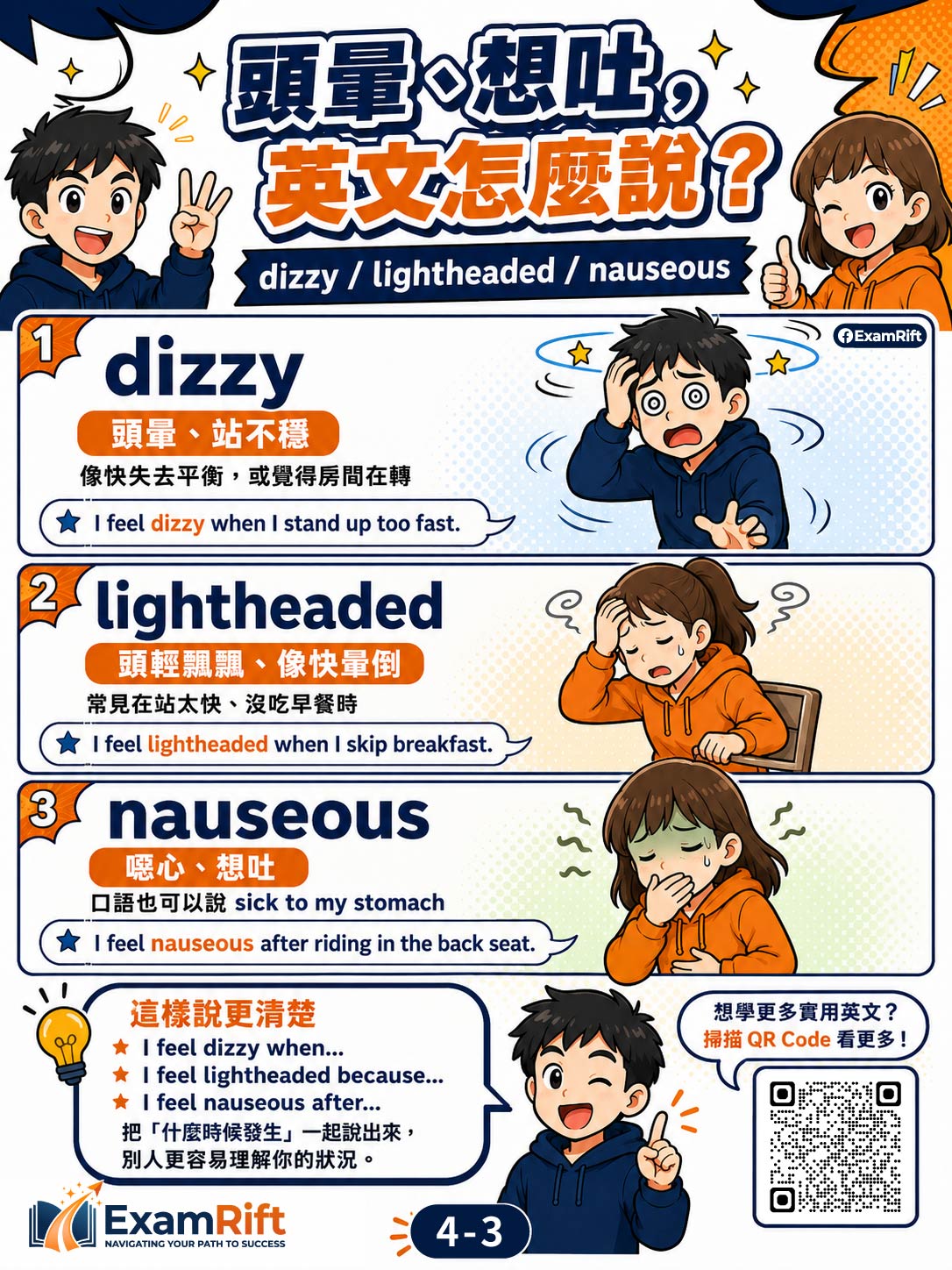
dizzy 用在你覺得自己可能會失去平衡、暈倒,或感覺房間在轉的時候。lightheaded 則用在你覺得頭部虛弱或飄飄然的時候,尤其是站太快的時候。
nauseous 用在你覺得自己可能會吐的時候。在日常口語裡,人們也會說 I feel sick to my stomach。
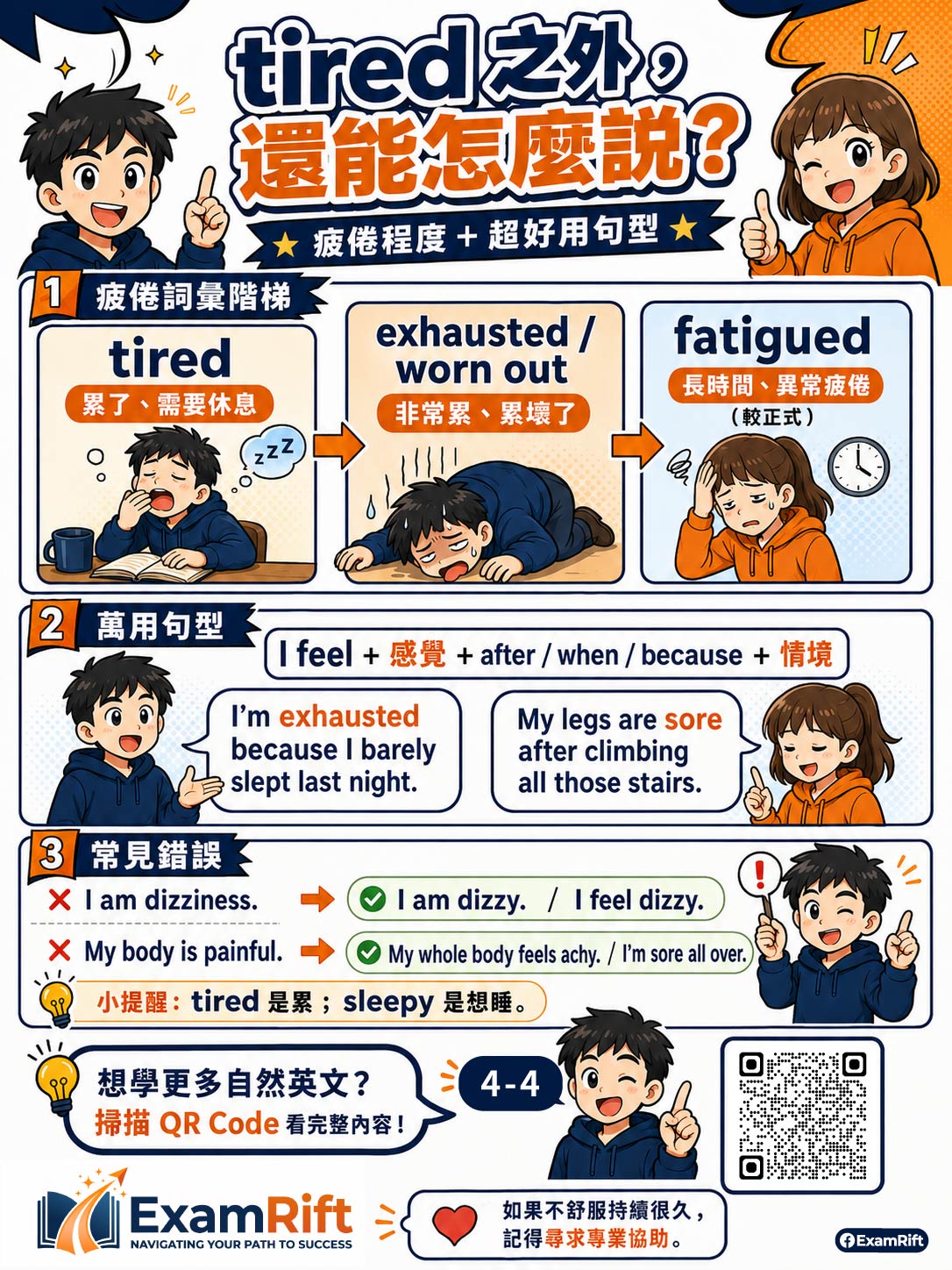
tired 用在一般需要休息的時候。當疲倦感強烈許多時,用 exhausted 或 worn out。在比較謹慎或與健康相關的說法裡,尤其當疲倦持續很久時,用 fatigued。
核心字彙與說法
- sore muscles:用力之後痠痛的肌肉
- a sore throat:喉嚨疼痛或不適
- a stiff neck:脖子活動起來緊繃或受限
- back stiffness:背部的緊繃
- dizzy:覺得站不穩,或感覺房間在動
- lightheaded:覺得頭部虛弱,好像快暈倒
- nauseous:覺得自己可能會吐
- sick to my stomach:表示噁心想吐的口語說法
- tired:需要休息或睡眠
- exhausted:極度疲倦
- worn out:活動或壓力之後非常疲倦
- fatigued:異常疲倦,常是長時間累積的
- achy:好幾個地方都隱隱作痛
- tender:碰到就會痛
- tight:緊繃、不放鬆
- weak:缺乏力氣
- shaky:發抖、不穩
- a dull ache:低度、持續的疼痛
- a sharp pain:突然、強烈的疼痛
- comes and goes:出現、消失,然後又再出現
自然搭配詞
英文使用者常會把描述身體感覺的字跟常見的動詞和身體部位連在一起。這些組合會比逐字翻譯來得自然。
你可以說 my shoulders feel tight、my knees feel stiff、my throat is sore、my stomach feels upset 或 my legs are shaky。要描述整體狀況時,說 I feel dizzy、I feel nauseous、I feel weak 或 I feel worn out。
當症狀有變化時,用 it is getting worse、it is starting to ease up、it comes and goes、it only happens when I stand up 或 it has been bothering me all morning 這類說法。
要表達程度時,在輕鬆的口語裡用 a little、pretty、really 或 extremely:「I'm a little lightheaded.」「My back is pretty stiff.」「I'm really exhausted.」在比較謹慎的說法裡,尤其是面對醫護人員時,數字會很有幫助:「The pain is about a six out of ten.」
例句
「My calves are sore from yesterday's run, but I can still walk normally.」
「I woke up with a stiff neck, so it hurts to turn my head.」
「I feel dizzy when I stand up too fast.」
「I'm a little lightheaded. I think I need to sit down.」
「That smell is making me nauseous.」
「I feel sick to my stomach, but I haven't thrown up.」
「I'm not just tired. I'm exhausted because I barely slept last night.」
「My whole body feels achy, like I'm coming down with something.」
「The pain comes and goes. It is not constant.」
「My shoulder is tender where I bumped it.」
說明原因與時間
一段到位的描述通常會包含原因和時間。試試這個句型:
I feel + 身體感覺 + after / when / because + 情境。
「My legs are sore after climbing all those stairs.」
「I feel lightheaded when I skip breakfast.」
「My back gets stiff when I sit for too long.」
「I feel nauseous after riding in the back seat.」
你也可以說明問題是什麼時候開始的:
「It started this morning.」
「It has been going on for two days.」
「It got worse after lunch.」
「It feels better when I lie down.」
這些簡短的細節能幫聽的人判斷這個感覺是暫時的、跟某項活動有關,還是可能需要多加留意。
學習者常犯的錯誤
一個常見的錯誤是什麼狀況都用 painful。「My body is painful」聽起來不自然。應該說「My body aches」、「I'm sore all over」或「My whole body feels achy」。
另一個錯誤是混淆 hurt 和 sore。「My throat hurts」沒問題,但「I have a sore throat」更常見。運動後的肌肉,說「My legs are sore」會比「My legs hurt very painful」更自然。
不要說「I am dizziness.」應該說「I am dizzy」或「I feel dizzy」。只有在比較醫療性的說法裡才用「I have dizziness」,而即使如此,「I feel dizzy」通常還是更清楚。
使用 tired 和 sleepy 要小心。tired 是指精力不足,sleepy 是指你想睡覺。你可以在漫長的一天後感到 tired,但還不到 sleepy。
不要過度使用 sick。在美式英文裡,「I feel sick」可以指一般性的不舒服,但「I feel sick to my stomach」特指噁心想吐。
小練習
把每個簡單的句子改寫得更有細節。
- 「My neck hurts.」
- 「I feel bad.」
- 「My stomach is not good.」
- 「I am very tired.」
- 「My legs hurt after exercise.」
參考答案:
- 「My neck is stiff, and it hurts when I turn my head.」
- 「I feel achy and weak, like I might be getting sick.」
- 「I feel nauseous, and my stomach has been upset since breakfast.」
- 「I'm exhausted because I only slept three hours.」
- 「My legs are sore from yesterday's workout.」
好的身體感覺英文具體但簡單。說出那種感覺、說出身體部位、解釋它什麼時候發生,並說明它是輕微、強烈、持續還是會變化的。