Traveling the US as an International Student — Visa, Budget & Safety Tips
The US is enormous — 3.8 million square miles across 50 states, six time zones, and wildly different climates. As an international student, you have a unique opportunity to explore it. But traveling here comes with rules and cultural norms that might surprise you.
F-1 Visa and Travel: Know the Rules
Traveling Within the US
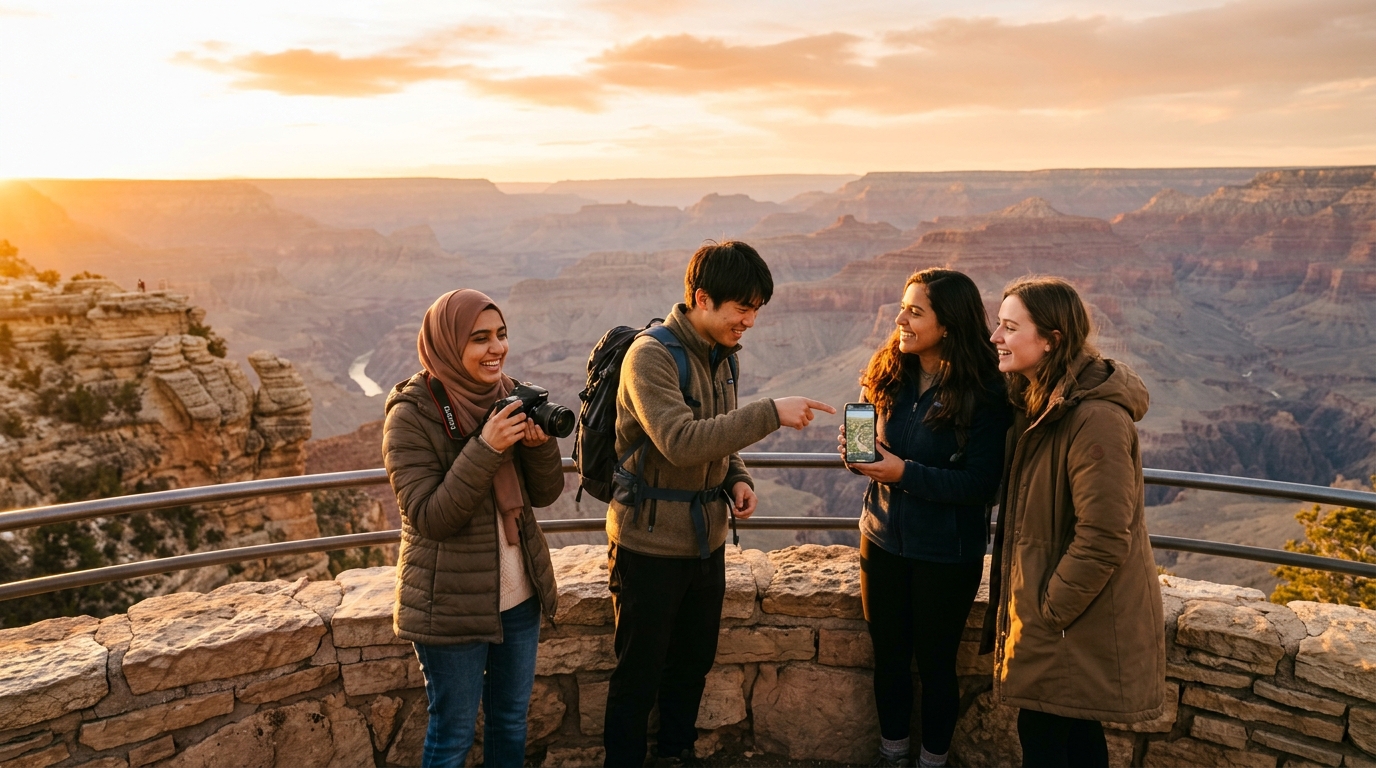
Good news: there are no restrictions on domestic travel within the US on an F-1 visa. You don't need permission from your school, and you don't need to notify USCIS. Fly to Hawaii, drive to the Grand Canyon, take a bus to New York — it's all fine.
Leaving and Re-Entering the US
This is where it gets serious. If you leave the US (even to Canada or Mexico), you need:
- Valid passport (not expiring within 6 months)
- Valid F-1 visa stamp in your passport (if expired, you must renew at a US embassy before returning — this can take weeks)
- Valid I-20 signed by your DSO (Designated School Official) within the last 12 months
- Proof of enrollment for the upcoming semester
Critical: If your F-1 visa stamp has expired, you can still stay in the US legally — but you cannot re-enter after leaving. Many students get trapped abroad waiting for visa renewal appointments. Plan accordingly.
During School Breaks
- Winter/spring break: Domestic travel is unrestricted. For international trips, ensure your I-20 travel signature is current.
- Summer break: If not enrolled in summer courses, ensure your I-20 shows your program is still active. Carry proof of fall enrollment.
- After graduation: Once your program ends, you have a 60-day grace period. You can travel domestically, but leaving the US ends your status.
What ID to Carry
For domestic travel, you need government-issued photo ID:
- Passport: Always works. Recommended for flights. Keep a photocopy in your luggage and a photo on your phone.
- State ID or driver's license: Works for TSA, but not all states issue them to F-1 students. Check your state.
- School ID: NOT accepted for flights. Useful for student discounts only.
Pro tip: Carry your passport for flights, but leave it in the hotel safe otherwise. Use your state ID or a photocopy for daily activities. Losing a passport abroad in the US is a bureaucratic nightmare.
Tipping Culture
This is one of the biggest culture shocks for international visitors. In the US, tips are not optional — they're expected because service workers are paid below minimum wage.
| Situation | Expected Tip |
|---|---|
| Sit-down restaurant | 18-20% of the pre-tax bill |
| Takeout/counter service | $0-2 (optional) |
| Coffee shop | $1 or 15-20% if ordering specialty drinks |
| Uber/Lyft | 15-20% (in the app) |
| Hotel housekeeping | $2-5/night (leave on pillow with a note) |
| Bellhop/porter | $1-2 per bag |
| Valet parking | $3-5 when they return your car |
| Tour guide | 15-20% of tour cost |
| Hair salon | 15-20% |
When NOT to tip: Fast food, self-service, gas stations, retail stores.
Calculation shortcut: Find the tax on your restaurant bill (usually 6-10%), then double it. That gives you roughly 15-20%.
Budget Strategies
Accommodation
| Option | Cost/Night | Best For |
|---|---|---|
| Hostels (HI USA) | $30-50 | Solo travelers, cities |
| Airbnb (shared) | $40-80 | Groups, longer stays |
| Motel 6 / Super 8 | $50-80 | Road trips, highway stops |
| Hotel (budget) | $80-150 | Comfort, business trips |
- Hostel tip: HI USA hostels exist in major cities and some national park areas. Book early for popular locations.
- Airbnb tip: Groups of 3-4 splitting an Airbnb is usually cheaper per person than hostels and gives you a kitchen.
- Hotel hack: Use AAA membership (some international auto clubs qualify) for 10-15% hotel discounts.
Food
- Grocery stores: Trader Joe's, Aldi, and Walmart are cheapest. A week of groceries costs $50-80.
- Fast food: $7-12 per meal. McDonald's, Chipotle, and Subway are everywhere.
- Restaurants: Lunch specials are 30-50% cheaper than dinner. Many restaurants have happy hour deals (4-6 PM) with discounted food.
- Water: Tap water is safe to drink everywhere in the US. Carry a reusable bottle.
Transportation Between Cities
- Flights: Book 4-6 weeks ahead on Google Flights. Southwest has free checked bags.
- FlixBus/Megabus: $10-30 between major cities. Book early for $1-5 fares.
- Amtrak: Scenic but slow. Student discount (15% off with Student Advantage card).
- Carpooling: BlaBlaCar or university ride-share boards for holiday travel.
Safety Tips
General
- The US is generally safe for tourists, but varies enormously by neighborhood.
- Research neighborhoods before booking accommodation. Google "[city name] safe neighborhoods for tourists."
- At night: Stick to well-lit, busy areas. Use ride-sharing instead of walking alone.
- Valuables: Don't leave anything visible in a parked car — car break-ins are common in some cities (San Francisco, Oakland, parts of LA).
Emergency Contacts
- 911 — Police, fire, ambulance. Free from any phone, even without a SIM card.
- 988 — Mental health crisis hotline (Suicide & Crisis Lifeline).
- Your embassy/consulate — Save the number in your phone. They help with lost passports, legal trouble, and emergencies.
- University emergency line — Your school's public safety number. Add it to your contacts.
Cell Phone Coverage
- Cities and highways: Excellent coverage on all major carriers.
- National parks and rural areas: Expect dead zones. Download offline maps (Google Maps lets you save areas) before heading into nature.
- Wi-Fi: Available at most hotels, restaurants, and coffee shops. Starbucks and McDonald's offer free Wi-Fi.
Health Emergencies
- Urgent care ($100-300): For non-life-threatening issues. Walk-in, no appointment needed.
- Emergency room ($1,000+): Only for true emergencies. Ambulance rides cost $500-2,000+.
- Travel insurance: If your student health insurance has limited coverage outside your school's state, consider supplemental travel insurance for long trips.
Quick Trip Planning Checklist
- Check your I-20 travel signature (for international travel)
- Carry passport for flights; state ID for daily use
- Download offline maps for areas with poor cell coverage
- Budget $50-80/day for food + accommodation (budget level)
- Learn tipping norms — 18-20% at restaurants
- Save 911 and your embassy's number in your phone
- Tell someone your travel plans and check-in schedule
- Check your health insurance coverage outside your school's state
The US has incredible diversity — from tropical beaches in Florida to glaciers in Alaska, from New York's skyscrapers to Montana's empty prairies. As an international student, you're in the perfect position to explore it. Just plan ahead, budget wisely, and stay aware of your visa status.