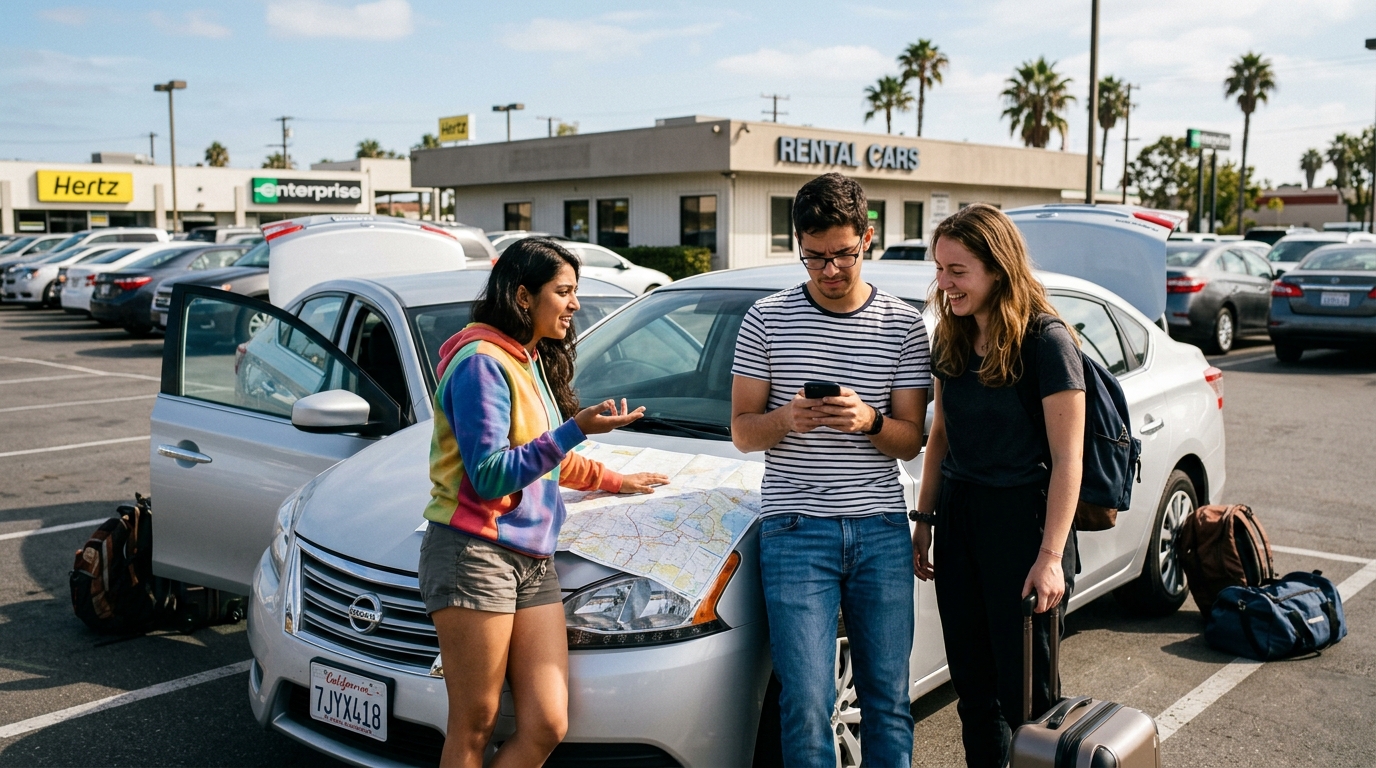
Renting a Car in the US — A Complete Guide for International Visitors
Outside of a few major cities with decent public transit, the US is a car country. If you want to visit national parks, explore suburbs, or simply get groceries in many college towns, you'll need a car. Renting one as an international visitor is straightforward — once you understand the rules.
Do You Need an International Driving Permit?
An International Driving Permit (IDP) is a translation of your home country's driver's license. Here's when you need one:
- Most US states accept a valid foreign license for up to 3-12 months, depending on the state.
- Rental companies technically require a license in English or an IDP. In practice, major companies (Hertz, Enterprise, Budget) accept licenses from most countries. But having an IDP avoids arguments at the counter.
- Get your IDP before you leave home. It's issued by your country's automobile association, typically costs $15-25, and is valid for one year.
Important: An IDP alone is not valid — you must always carry your original license with it.
Choosing a Rental Company
Major National Companies
| Company | Strength | Watch Out For |
|---|---|---|
| Enterprise | Largest fleet, neighborhood locations | Upselling at counter |
| Hertz | Premium vehicles, good app | Higher base price |
| Budget/Avis | Competitive pricing | Older vehicles sometimes |
| National | Skip-the-counter for members | Limited locations |
Alternatives
- Turo — Peer-to-peer car rental (like Airbnb for cars). Often cheaper, wider vehicle selection, but insurance is more complex.
- Zipcar — Hourly/daily rentals in cities. Great for occasional use. Requires membership ($9/month).
- Costco Travel — If you have a Costco membership, their rental rates are often the best available, with fewer restrictions.
Booking Tips
- Book online in advance — Counter prices are 2-3x higher than online rates.
- Compare on aggregators — Kayak, Google, or AutoSlash for price comparison.
- Book the smallest car — You'll often get a free upgrade at pickup when small cars are unavailable.
- Prepaid vs pay-later — Prepaid rates are cheaper but non-refundable. Pay-later allows free cancellation.
The Insurance Maze
This is where rental companies make most of their profit — and where most visitors overpay. Here's what each coverage means:
CDW/LDW (Collision/Loss Damage Waiver)
- What it is: Covers damage to the rental car itself.
- Cost: $15-35/day
- Do you need it? Maybe not. Many credit cards (Chase Sapphire, Amex) include CDW coverage if you decline the rental company's and pay with that card. Check your card benefits before your trip.
SLI (Supplemental Liability Insurance)
- What it is: Covers injury/damage you cause to other people or their property.
- Cost: $12-20/day
- Do you need it? If you don't have a US auto insurance policy, yes. Your home country's insurance almost certainly doesn't cover US rentals. This is the one coverage worth buying.
PAI/PEP (Personal Accident/Personal Effects)
- What it is: Covers your own injuries and stolen belongings.
- Cost: $5-10/day
- Do you need it? Almost certainly not. Your travel insurance or health insurance likely covers this. Skip it.
The Credit Card Strategy
If your credit card offers primary CDW coverage:
- Decline all coverage at the counter
- Pay the full rental with that card
- If anything happens, file a claim with your credit card company
Warning: Credit card CDW typically does NOT cover trucks, SUVs over a certain size, or rentals longer than 30 days. Read the fine print.
The Under-25 Surcharge
If you're under 25, expect to pay an additional $20-30/day — yes, per day. This can easily double the cost of a rental.
Ways around it:
- USAA members (military families) — No young driver fee at several companies.
- Costco Travel bookings — Some companies waive the fee for Costco members.
- Corporate/university codes — Some universities negotiate fee waivers. Check with your international student office.
- State exceptions — New York state prohibits the surcharge for drivers 18+.
Gas, Tolls, and Parking
Gas
- Return the car with a full tank. If you don't, the rental company will charge $8-12/gallon — roughly 3x the pump price.
- Gas stations are self-service in most states. Pay at the pump with a card, or prepay inside. Some pumps don't accept foreign cards — go inside and tell the cashier your pump number and dollar amount.
Tolls
- Many highways have electronic tolls with no cash option. Rental cars usually have a transponder (E-ZPass, SunPass, etc.).
- Check your rental agreement: Some companies charge $5-10/day for toll transponder use, plus the actual tolls. Others charge per toll crossing at inflated rates.
- Consider buying a temporary toll pass if you're driving toll-heavy routes (Florida, Northeast corridor).
Parking
- Cities: Street parking is metered ($2-6/hour). Garages are $20-60/day. Read signs carefully — parking tickets are $50-150.
- Hotels: Many hotels charge $20-50/night for parking, even if you're a guest.
- SpotHero app: Find and reserve cheaper parking in advance.
Returning the Car
Hidden Fees to Avoid
- One-way drop-off fee: Returning to a different location can add $100-500+. Same-city drops between airport and neighborhood locations are sometimes free.
- Late return: Even 30 minutes late can trigger an extra day's charge.
- Cleaning fee: If the car is excessively dirty (muddy off-roading, pet hair), expect a $50-250 fee. Normal road trip dirt is fine.
- Fuel service fee: Returning without a full tank costs $8-12/gallon.
At Return
- Fill up the gas tank at a station near the return location
- Take photos of the car from all angles (documentation against false damage claims)
- Return on time
- Get a receipt or confirmation email
Quick Checklist
- Get an IDP before leaving your home country
- Check your credit card's rental car insurance benefits
- Book online in advance (never walk up to the counter)
- Decline CDW if your credit card covers it; buy SLI if you have no US auto insurance
- Budget for under-25 surcharge if applicable
- Return with a full tank and on time
- Take photos of the car at pickup AND return
- Download GasBuddy app to find cheap gas stations
Renting a car in the US gives you freedom that public transit simply can't match. The key is understanding the fee structure before you sign anything at the counter. A $30/day rental can easily become $80/day with unnecessary insurance and add-ons — or it can stay at $30 if you come prepared.